Quantum Computing for Ubiquitous and Pervasive
Computing Systems
Abstract
Quantum Computing for Ubiquitous and Pervasive Computing Systems
Quantum computing is an emerging field at the intersection of com puter science, quantum mechanics, and mathematics; offering a novel approach to problem-solving that enables efficient solutions for problems intractable on classical computers. As researchers demonstrate quantum supremacy and cloud-based quantum hard ware becomes increasingly accessible, the field is transitioning from theoretical research to practical reality. This tutorial aims to introduce the UbiComp and ISWC community to the most general gate-based (circuit model) quantum computing and its potential applications within ubiquitous and pervasive computing systems.
The tutorial is structured to provide a comprehensive founda tion, starting with quantum computing principles—such as qubits, gates, and circuits—and progressing to the mapping of pervasive computing problems (e.g., localization) into quantum models. We will discuss current challenges, including Noisy Intermediate-Scale Quantum (NISQ) era systems, and explore future opportunities for research. By bridging the gap between quantum algorithms and per vasive systems, this tutorial seeks to foster a new sub-community dedicated to exploring quantum-driven innovations in ubiquitous computing.
The tutorial will also include hands-on experience on Quantum Simulators and quantum cloud platforms. The tutorial will end with a discussion of open research problems and challenges for real-world problems in the pervasive computing domain.
Keywords
// tutorial topics
Objectives and Learning Outcomes
01 —
Foundational Knowledge
Understand the core principlesof quantum mechanics applied to computing (superposition, interference, entanglement) and the gate-based circuit model.
Foundational02 —
Algorithmic Understanding
Learn how gate-based algorithms can be applied to ubiquitous computing tasks.
gate-based algorithms03 —
Problem Formulation
Acquire the ability to map classical pervasive computing problems(e.g., localization) to quantumcircuits.
quantum circuits.04 —
Strategic Insight
Identify current research challenges, including the limitations and possibilities of NISQ-era systems.
NISQ-era05 —
Community Engagement
Connect with a group of researchers interested in exploring the intersection of quantum and pervasive technologies.
quantum and pervasive technologies// organizers
Organizers & Presenters
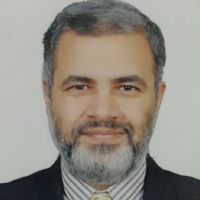
Prof. Moustafa Youssef
Lead OrganizerProfessor, American University in Cairo, New Cairo, Egypt
moustafa.youssef@aucegypt.eduDistinctions
ACM FellowIEEE FellowAAAS FellowAAS Fellow
Expertise
Professor at the American University in Cairo. His expertise includes mobile and pervasive computing, location determination systems, mobile and wireless networks, and quantum computing.
Quantum Experience
Recently led tutorials and workshops on quantum computing for spatial systems and indoor positioning at IPIN 2024 and ACM SIGSPATIAL 2025. He has also delivered numerous keynotes and invited talks on leveraging quantum computing for location tracking systems.
Awards
University of Maryland Invention of the Year Award, TWAS-AAS-Microsoft Award, multiple Google Research Awards, Egyptian State Excellence Award, and numerous Best Paper and Runner-Up awards for his quantum computing work.
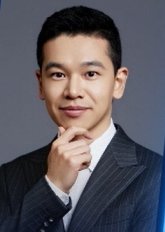
Prof. Wei Li
OrganizerProfessor, College of Computer Science and Technology, Harbin Engineering University, Harbin, China
wei.li@hrbeu.edu.cnDistinctions
CCF Senior MemberNational-level Young Talent in China
Expertise
Professor at Harbin Engineering University, China. His expertise includes spatial-temporal data mining and quantum computing.
Quantum Experience
Developed QCloudSimpy, a Python-based quantum cloud simulator leveraging reinforcement learning.
Awards
Second Prize for Technical Invention of Heilongjiang Province, First Prize for Science and Technology Progress of State Grid, and Best Paper Award at CCF Conference, among others.

Prof. Rahul Yadav
OrganizerAssociate Professor, College of Computer Science and Technology, Harbin Engineering University, Harbin, China
rahul@hrbeu.edu.cnDistinctions
Senior Member of IEEE
Expertise
Associate Professor at Harbin Engineering University, China. His expertise includes mobile and edge computing and quantum cloud computing.
Quantum Experience
Co-developed QCloudSimpy, a Python-based quantum cloud simulator.
Awards
Research contributions in mobile and edge computing and quantum cloud computing.
// Detailed Tutorial Plan
Content and Schedule
–
Module 1:
Foundations of Quantum Circuits
60 mins
–
Module 2:
Mapping Pervasive Problems to Quantum Models
60 mins
–
Module 3
Case Studies and Applications
45 min
–
Module 4
Challenges, NISQ, and Future Roadmap
30 mins
–
Module 5
Hands-on Lab
60 mins
// organizers
Tutorial Organizers
Prof. Moustafa Youssef
American University in Cairo, New Cairo, Egypt
Prof. Wei Li
Harbin Engineering University, Harbin, China
Prof. Rahul Yadav
Harbin Engineering University, Harbin, China
// call for participation
Join Us in Shanghai
We invite researchers, practitioners, and students from ubiquitous computing, HCI, mobile systems, and quantum information to attend. No quantum background required.
// venue · shanghai
Shanghai International Convention Center
UbiComp 2026 takes place at one of Asia's premier convention venues, located in the heart of Lujiazui, Shanghai's Financial and Trade Zone in Pudong District.
2727 Riverside Ave, Lujiazui, Shanghai 200120, China
Lujiazui Station (5 min walk)
Room 5J · Conference Oct 13–15
// contact
Get in Touch
GENERAL CHAIRS
tutorial@ubicomp2026.orgWORKSHOP CHAIRS
lin.chen@tsinghua.edu.cnConference Website
ubicomp.org/ubicomp2026CONTACT
@ubicomp2026